

8min read • a month ago
One month. Four semesters of knowledge. Sixteen experiments in three hours and a mind that wouldn't stop thinking about what was at stake...
I knew my first professional examination was serious long before I opened my first set of revision materials. Perhaps it was because of the kind of student I had always been. Academically, I take things seriously, sometimes a little too seriously and with Pros, I didn't need anyone to remind me of the stakes.
I had approximately a month to prepare, and I knew what passing meant. I also knew what failing could mean - an extra year. That little negative thought followed me everywhere these past 30 days.
On the days I studied well, it reminded me why I needed to keep going. On the days I struggled to concentrate, it made me anxious about the time I was losing and on the days I barely managed to study at all, it could be downright overwhelming and cue the water works.
There was so much to cover, so little time, and an enormous amount riding on the outcome. Welcome to my First Professional Examination Journey (part 1).
📚The Plan That Didn't Quite Work
My class had a well structured albeit daunting study timetable for the days leading up to Pros. Once the schedule was shared, I tried to cover everything assigned for the day: multiple-choice questions (MCQs), viva questions, spot questions, and practical experiments. For the procedures, I had an additional challenge. I needed to learn them well enough to reproduce them quickly under examination conditions.
But first, the MCQs.
My initial strategy was simple: read all the lecture slides from 300L.
In theory, it sounded reasonable. If I could go through the slides thoroughly, surely I would be better prepared?
In practice, it was a massive flop.
The volume was overwhelming. I kept zoning out, and the more I looked at the materials ahead of me, the more impossible the task seemed. There were simply too many slides to cover in the time I had, especially with viva, experiments, and spot questions demanding attention too. I cried seriously by day 4 and genuinely wondered how I had been making my grades in the first place.
Eventually, I changed my approach.
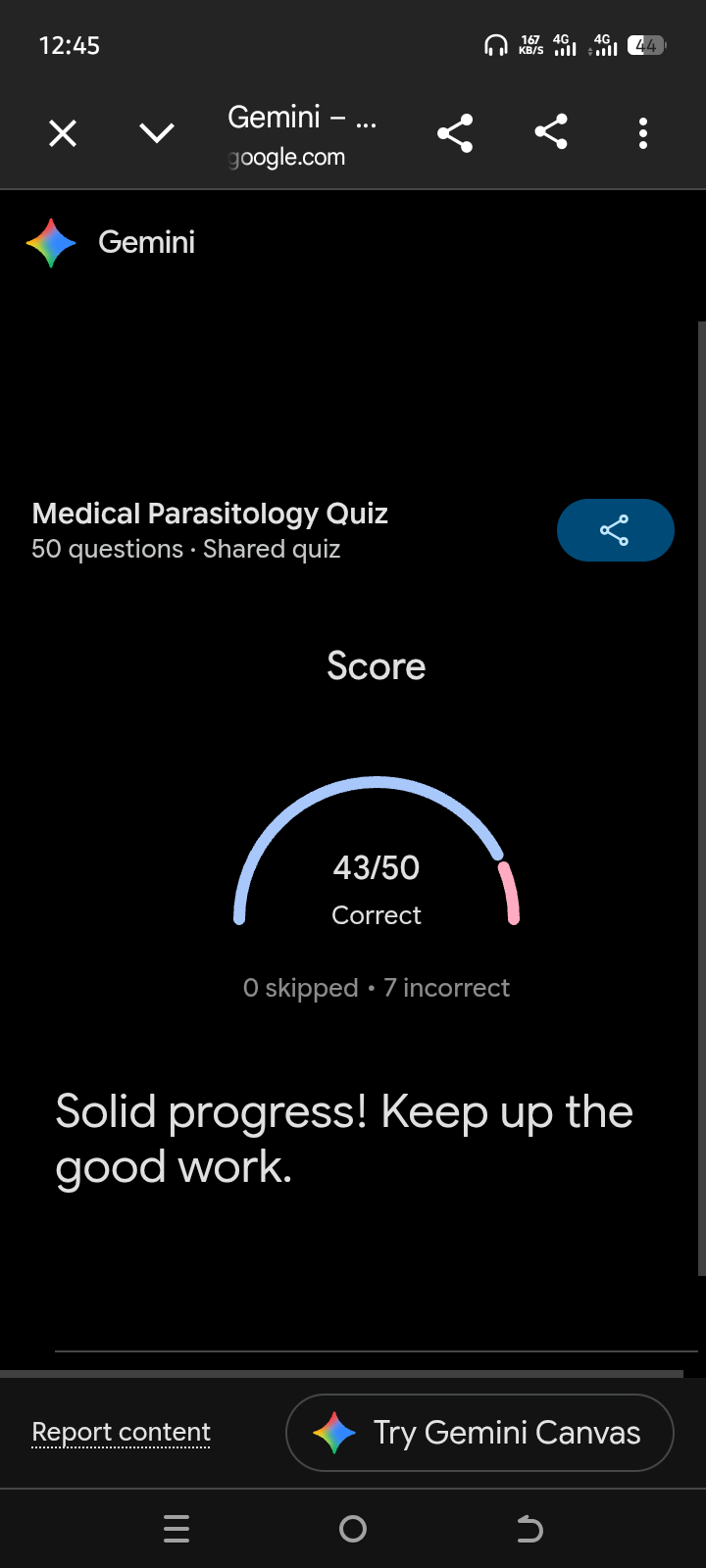
Rather than forcing myself through every slide from beginning to end, I started working with summary questions prepared by my class academic team using Gemini. I used these to test my knowledge and identify areas that needed more attention, then returned to the relevant lecture slides and used AI tools to help clarify concepts I wasn't confident about. That change of strategy was probably the best decision I made in my study approach.
Therefore, past and prepared questions became a major part of my preparation across the different sections. It was a more practical strategy, but it didn't magically make the workload disappear. Even the questions felt endless, sigh.
Still, I had learnt something important, sometimes, the strategy that sounds most thorough isn't the one that serves you best. I had to find a way to study that was realistic enough to sustain and effective enough to prepare me.
⏳Learning to Write Against the Clock
If the MCQs tested how much I could recall, the practical component tested something else entirely: how quickly I could put what I knew on paper. We had sixteen experiments to write in three hours. Sixteen!
When I initially started timing myself, I was spending an average of seven minutes on a procedure and my target was three to four minutes. At that rate, I was in serious trouble. It wasn't enough to understand and perform the experiments. I needed to recall their procedures accurately and write them fast enough to finish within the allotted time.
So I practised speed writing.
I kept working on the procedures, timing myself, and trying to close the gap between my actual speed and the speed I needed. Gradually, some experiments became so familiar that I could write them almost instinctively. That improvement became one of my biggest confidence boosters.
Every time I completed a procedure within my target time, I had tangible evidence that I was getting better at something that had initially worried me. My spot questions also gave me some courage. The MCQs, however, remained a different story. I never quite reached a point where I felt completely prepared for them.
😔When Preparation Meets Real Life
As if the academic workload wasn't enough, my health interrupted my preparation twice.
First, malaria took me away from studying for several days. Then my period arrived and left me struggling immensely when I wanted to study but didn't have the physical capacity to do so as I had planned. Those were really difficult days for me mentally. It is frustrating to have a timetable, understand what is at stake, and genuinely want to work, only to discover that your body will not cooperate.
The anxiety didn't make resting any easier. Even when my timetable said it was time to rest, I often struggled to do so because I kept thinking about everything I hadn't covered.
I did try to maintain a small connection with my materials, even on bad or sad days. Sometimes, that meant opening my spot questions and experiments and looking through them until my eyes practically crossed, even when I wasn't actively absorbing much.
Looking back, I know that merely opening a book isn't the same as learning from it. But during those moments, I was trying to hold on to some consistency when my original plans had fallen apart.
I was also battling the fear of failure, sleepless nights, and the persistent feeling that I wasn't doing enough.
The volume of material for the MCQs genuinely amazed me. How had we accumulated so much knowledge over two years, and how was I supposed to revise it all in about twenty days? It was a question I asked myself repeatedly and most times, I had no reassuring answer.
🫂The People Who Helped Me Keep Going
Something else was happening alongside the anxiety, the revision, and the endless questions. My family, coursemates and friends were cheering me on.
I had friends who would take their time to write me a thoughtful message, others who would leave their comfort zone to motivate me in the library, the ones who made sure I was eating cause I really can be neglectful, and the ones who forced me to catch a break when I was running on fumes.
Their sacrifices and encouragement mattered more than I can fully explain. There were moments when I struggled to believe in myself, and having these people around me who continued to encourage me helped me keep moving.
I also learnt to encourage myself, even when I didn't always believe what I was saying. Some days, I was my own biggest motivator. On other days, I was the person discouraging myself the most but I kept trying.
Slowly, my writing speed improved, and more experiments became familiar. My confidence in the spot section grew. I began to see evidence that my preparation was producing something, even though I still had doubts about the MCQs. I wasn't suddenly fearless. I simply had a few more reasons to believe I could do this.
🥺What I Would Do Differently
One thing I have learnt from preparing for my first professional examination is that I am capable of doing difficult things when I set my mind to them.
That is something I am proud of but I also know there are things I would approach differently if I had the opportunity to prepare again.
The MCQs are at the top of that list.
I wish I had approached them more strategically and with greater determination from the beginning, rather than allowing the sheer volume of material to intimidate me as much as it did. Perhaps I could have covered more ground and strengthened my knowledge in areas where I remained uncertain.
I cannot say exactly how much difference that would have made, but it is a lesson I intend to carry forward.
Preparation is not just about how much material exists. It is also about how you approach it, how early you start, and how effectively you use the time available.
You can also acknowledge that you did your best with the circumstances you had while still recognising where you could improve.
Two truths can exist, can't they?
In all, when I think about the weeks leading up to Pros, I remember the severe anxiety, the failed study strategies, the procedures I struggled to write within time, the days illness kept me away from my books, and the moments I questioned whether I was doing enough.
I also remember adapting. I remember getting faster. I remember experiments becoming familiar. I remember my friends cheering me on when my confidence needed the extra support and I remember continuing to show up, even when the preparation was far from perfect.
At the time, I was so focused on the possibility of failing that I didn't always stop to appreciate the progress I was making.
I was learning more than I realised about my study habits, my limits, my resilience, and the importance of having people in my corner.
My first professional examination would eventually become one of the most significant academic experiences of my Medical Laboratory Science journey but before there was a score, there was a student trying to prepare for a very important examination with the time, strength, and resources she had. That student was me and this was the journey that led me to Pros.
But preparation was only half the story.
What happened when I finally walked into the examination hall?
That is a story for Part Two, till then!🔬