

11min read • 15 days ago
The confirmation of an imported case of Bundibugyo virus disease in Nigeria on 20 October 2026 has renewed attention to the country's preparedness for emerging infectious diseases. The Federal Ministry of Health and Social Welfare confirmed the case in the Federal Capital Territory (FCT), following the patient's presentation at a private health facility in Abuja. Public health authorities subsequently initiated contact tracing, surveillance and infection prevention and control measures to limit further transmission (Federal Ministry of Health and Social Welfare, 2026).
Although an imported case does not automatically indicate sustained transmission within a country, it highlights the importance of maintaining a health system capable of recognising suspected infections, obtaining reliable laboratory confirmation and initiating appropriate public health action.
Medical laboratories occupy a central position in this process. Early symptoms of Ebola disease, including fever, fatigue, headache and muscle pain, can resemble those of other infectious diseases. Consequently, clinical assessment alone cannot reliably establish the diagnosis when Ebola disease is suspected.
Nigeria had undertaken preparedness activities before the imported case was confirmed. These included a national public health advisory and a preparedness simulation exercise intended to assess response arrangements and identify gaps requiring attention (Nigeria Centre for Disease Control and Prevention [NCDC], 2026a, 2026b).
The subsequent confirmation provides an opportunity to examine how preparedness arrangements, diagnostic capacity, biosafety and specimen referral contribute to an effective outbreak response.
The central question is not simply whether Nigeria possesses molecular diagnostic equipment, but whether the different components of its diagnostic system can work together reliably when a suspected case is identified.
Bundibugyo virus disease is caused by Bundibugyo virus, a member of the genus Orthoebolavirus. It is distinct from disease caused by Zaire ebolavirus, which was responsible for the major West African Ebola epidemic of 2014–2016.
This distinction has practical diagnostic implications. Laboratories must use methods appropriate to the pathogen under investigation, and the ability to perform molecular testing for one virus does not automatically establish the ability to detect every related virus.
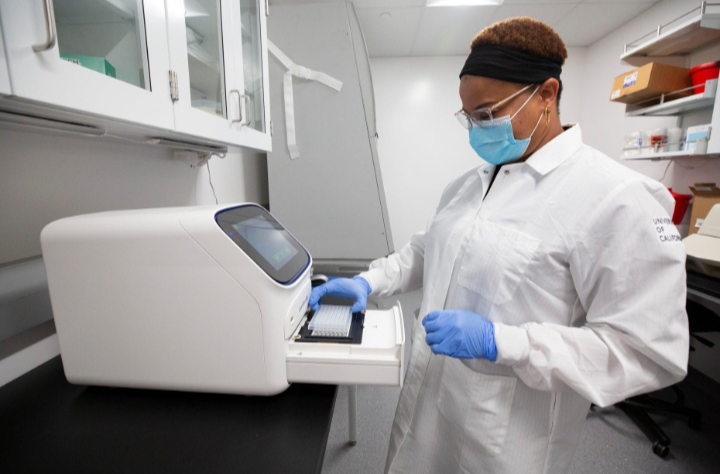
Reverse-transcription polymerase chain reaction (RT-PCR) is an important method for detecting viral RNA in appropriate clinical specimens. The method involves converting RNA into complementary DNA before amplification and detection. The reliability of the result depends on several factors, including specimen suitability, assay performance, timing of collection and adherence to established testing procedures.
Laboratory diagnosis is not simply a technical exercise. Results inform clinical decisions, case investigations, contact tracing and the implementation of infection prevention and control measures.
The World Health Organization (WHO) issued updated interim guidance on diagnostic testing for Ebola and Marburg virus diseases in July 2026. The guidance addresses important aspects of the diagnostic process, including specimen collection, testing, result interpretation and reporting, alongside relevant biosafety considerations (WHO, 2026b).
Consequently, effective diagnostic preparedness requires more than access to PCR instruments. It also depends on appropriate testing methods, trained personnel, quality management, suitable biosafety arrangements and reliable systems for transporting specimens and communicating results.
Nigeria's documented preparedness activities provide an important starting point for examining its response capacity.
On 28 May 2026, the NCDC issued a national public health advisory calling on states and the FCT to strengthen preparedness for Bundibugyo virus disease. The advisory addressed early detection, isolation and referral, laboratory diagnosis, infection prevention and control, contact tracing, risk communication and healthcare worker protection (NCDC, 2026a).
The NCDC subsequently reported conducting a National Ebola Virus Disease Preparedness Tabletop Simulation exercise. The exercise was intended to test response arrangements and identify gaps requiring attention. According to the NCDC's October 2026 press statement, the preparedness activities involved collaboration with the Federal Ministry of Health and Social Welfare, Port Health Services, state governments and other stakeholders (NCDC, 2026b).
These activities demonstrate that Nigeria had undertaken documented preparedness measures before the October case.
However, preparedness plans and simulation exercises are only components of a functioning response system. Their effectiveness depends on whether identified gaps are addressed, responsibilities are clearly defined and the required resources remain available.
The publicly available information reviewed for this article does not establish which specific laboratory deficiencies, if any, were identified during the simulation or whether all recommended improvements had been completed before the imported case was confirmed.
It would therefore be inappropriate to conclude that the exercise failed or that Nigerian laboratories were inadequately prepared. A more defensible approach is to examine the requirements for operational readiness and identify the evidence needed to evaluate performance.
One important development in 2026 was the expansion of diagnostic options for Bundibugyo virus.
On 2 July 2026, WHO announced that the first molecular diagnostic test specifically addressing Bundibugyo virus had been added to its Emergency Use Listing (EUL). On 7 August 2026, WHO announced two additional diagnostic options under its EUL pathway for in vitro diagnostic products (WHO, 2026a, 2026d).
These developments illustrate an important principle: the availability of molecular diagnostic equipment does not necessarily guarantee access to an appropriate test for the pathogen responsible for an outbreak.
Diagnostic readiness also depends on assay suitability, quality assurance, personnel competence, reagent availability and the ability to maintain testing services during an emergency.
For Nigeria, an important question is whether designated testing facilities can maintain timely access to suitable, quality-assured diagnostic methods for the relevant virus.
The public reports reviewed for this article do not establish which specific diagnostic products were used to confirm the October case or the extent of their availability across Nigeria's laboratory network. It would therefore be inappropriate to infer that the country lacked appropriate diagnostic capacity.
Instead, the development of new Bundibugyo-specific diagnostic options highlights why access to suitable assays should form part of continuing laboratory preparedness assessments.
A reliable diagnostic pathway involves several interconnected stages. Delays or weaknesses at any stage may affect the timely availability of results and the initiation of public health measures.
The process begins when a healthcare facility identifies a patient whose clinical presentation and epidemiological history raise suspicion of Ebola disease.
Because early symptoms are nonspecific, an appropriate travel and exposure history is important. Healthcare workers should follow established protocols when assessing suspected cases, applying infection prevention and control measures and notifying the relevant public health authorities.
The NCDC's preparedness advisory emphasised early detection, isolation, referral and prompt public health action (NCDC, 2026a).
Timely recognition and notification are essential because delays can postpone the activation of specimen referral arrangements, diagnostic testing and contact tracing.
Once a suspected case is identified, appropriate arrangements must be activated for specimen collection and referral.
This requires clear communication between the referring facility and the designated testing laboratory. Specimens must be collected, packaged, transported and received according to established procedures for the suspected pathogen.
The referral pathway should define responsibilities, communication channels and procedures for addressing transport delays or other logistical problems.
A country may possess molecular diagnostic facilities, but their existence alone does not establish that specimens from every location can reach the appropriate laboratory promptly and safely.
For high-consequence pathogens, specimen handling and transportation must follow applicable national protocols and relevant biosafety requirements. Potentially infectious material should not be handled or tested casually in laboratories that lack the required facilities, training and authorisation.
At the designated laboratory, testing must be performed using an appropriate, validated diagnostic method.
Laboratory personnel must follow established procedures for specimen acceptance, testing, quality control, result verification and reporting. Unexpected or inconclusive results must be managed according to the applicable diagnostic algorithm and public health protocols.
The objective is not merely to obtain a positive or negative result, but to generate reliable information that can support clinical management and outbreak control.
Laboratory findings must be communicated promptly to the appropriate clinical and public health authorities.
The results support case investigation, contact tracing, infection prevention and control, and decisions about the wider response.
Consequently, diagnostic performance should not be assessed solely by the analytical speed of an assay. The entire system must also consider specimen transportation, laboratory processing, result verification and communication.
The Nigerian case was laboratory-confirmed on 20 October 2026. At the time of the initial announcement, 44 contacts had been identified for monitoring (Federal Ministry of Health and Social Welfare, 2026).
On 23 October, the Federal Government announced that genomic analysis conducted by the NCDC and the Institute of Genomics and Global Health at Redeemer's University had found the Nigerian virus genetically related to the virus identified in a case in Kenya. Officials emphasised that further investigation was required to establish whether the cases were epidemiologically linked (Federal Ministry of Information and National Orientation, 2026).
This development illustrates the contribution of specialised laboratory methods to outbreak investigation.
Genomic analysis can help characterise pathogens and investigate genetic relationships between viral samples. However, genetic similarity alone does not establish direct transmission between individuals or prove the route through which an infection was acquired. Genomic findings must be interpreted alongside epidemiological evidence.
The case also highlights the importance of effective coordination among clinical facilities, diagnostic laboratories and public health authorities.
Nevertheless, the publicly available reports reviewed for this article do not establish every operational detail of the diagnostic pathway. In particular, they do not fully document the sequence of specimen collection, transportation, receipt, testing and result reporting.
The interval between a patient's presentation at a health facility and confirmation should therefore not automatically be interpreted as laboratory turnaround time.
Similarly, the absence of publicly available operational details is not evidence that the diagnostic process was inadequate. It limits the conclusions that can responsibly be drawn from the information available.
The appropriate response is to identify what should be measured and documented to evaluate the performance of the system.
Nigeria's experience provides an opportunity to consider how preparedness for high-consequence infectious diseases could be evaluated systematically.
The following indicators could support assessments by relevant public health authorities.
The interval between recognition of a suspected case and notification of the appropriate public health authority should be documented. Delays may affect the timely activation of response arrangements.
Authorities should assess the time between specimen collection and receipt at the designated testing laboratory. This can help identify logistical difficulties and opportunities to improve referral arrangements.
The interval between laboratory receipt of a specimen and communication of the verified result should be monitored. This should be distinguished from the time spent transporting the specimen and communicating the result.
Preparedness assessments should establish whether appropriately trained personnel can be mobilised when required and whether responsibilities are clearly defined.
Assessments should examine documented risk assessments, appropriate protective measures, staff training and compliance with established procedures for handling and referring potentially infectious specimens.
Relevant indicators include the availability of essential supplies, functioning equipment, appropriate testing methods, quality control arrangements, reliable communication systems and contingency plans.
These indicators are proposed measures for future assessment. They are not results from a national evaluation of Nigerian laboratories.
Collectively, they could help authorities move beyond general statements about preparedness towards measurable evidence of operational readiness.
Several practical measures deserve continued attention.
First, preparedness exercises should be followed by documented action plans identifying responsible institutions, timelines, required resources and methods for verifying that identified gaps have been addressed.
Second, specimen referral networks should have clearly defined procedures for communication, transportation, receipt and escalation of problems. These arrangements should be tested periodically rather than assumed to work because they exist on paper.
Third, designated laboratories should maintain appropriate diagnostic methods, quality management systems, trained personnel and the resources required to sustain operations during emergencies. Preparedness should also account for equipment failure, supply interruptions and the need to maintain essential routine laboratory services.
Fourth, healthcare workers in public and private facilities should receive regular training on recognising suspected cases, reporting promptly, applying appropriate infection prevention and control measures, and activating established referral pathways.
Fifth, access to appropriate molecular assays should be incorporated into preparedness planning. Authorities should consider whether designated testing facilities can obtain and maintain access to suitable diagnostic products, including those needed for emerging or less frequently encountered pathogens.
Finally, collaboration among clinical facilities, diagnostic laboratories, public health authorities and relevant research institutions should be strengthened. Nigeria's use of genomic analysis during the investigation demonstrates the contribution that specialised laboratory and research capacity can make to outbreak response.
These recommendations should complement existing national arrangements rather than duplicate them. Implementation should be guided by the relevant authorities and informed by documented assessments of actual needs.
Nigeria's imported case of Bundibugyo virus disease underscores the importance of maintaining a diagnostic system capable of supporting timely and reliable public health action.
The country's documented preparedness advisory, tabletop simulation exercise and use of genomic analysis provide important context for understanding its response. However, preparedness should be evaluated through evidence of operational performance, not solely through the existence of plans, facilities or equipment.
For Medical Laboratory Scientists, the implications extend beyond performing diagnostic assays. Their responsibilities include maintaining quality, following appropriate biosafety procedures, producing reliable results and supporting the communication of laboratory information that informs public health decisions.
Ultimately, effective outbreak preparedness depends on an integrated system in which clinical recognition, specimen referral, laboratory confirmation and public health response work together.
Nigeria's experience provides an opportunity to strengthen this integration through measurable preparedness indicators, regular exercises and systematic evaluation of diagnostic pathways. Such efforts are essential for protecting healthcare workers, supporting outbreak control and maintaining public confidence in the country's laboratory and public health systems.
Federal Ministry of Health and Social Welfare. (2026, October 20). FG confirms Ebola disease case in FCT, activates public health response
Federal Ministry of Information and National Orientation. (2026, October 23). FG provides update on FCT Ebola case as genetic analysis shows virus is related to virus identified in Kenya.
Nigeria Centre for Disease Control and Prevention. (2026a, May 28). National public health advisory on state preparedness for Bundibugyo Ebola virus disease (EVD).
Nigeria Centre for Disease Control and Prevention. (2026b, October 6). NCDC heightens vigilance following confirmation of imported Ebola disease case in Kenya.
World Health Organization. (2026a, August 7). 2 additional tests listed under the EUL for IVDs.
World Health Organization. (2026b, July 13). Diagnostic testing for Ebola disease and Marburg virus disease: Interim guidance, 9 July 2026.
World Health Organization. (2026c, October 23). Ebola disease caused by Bundibugyo virus: Democratic Republic of the Congo, Kenya and Nigeria.
World Health Organization. (2026d, July 2). WHO adds first diagnostic test for Ebola Bundibugyo virus to its Emergency Use Listing.