

3min read • 6 months ago
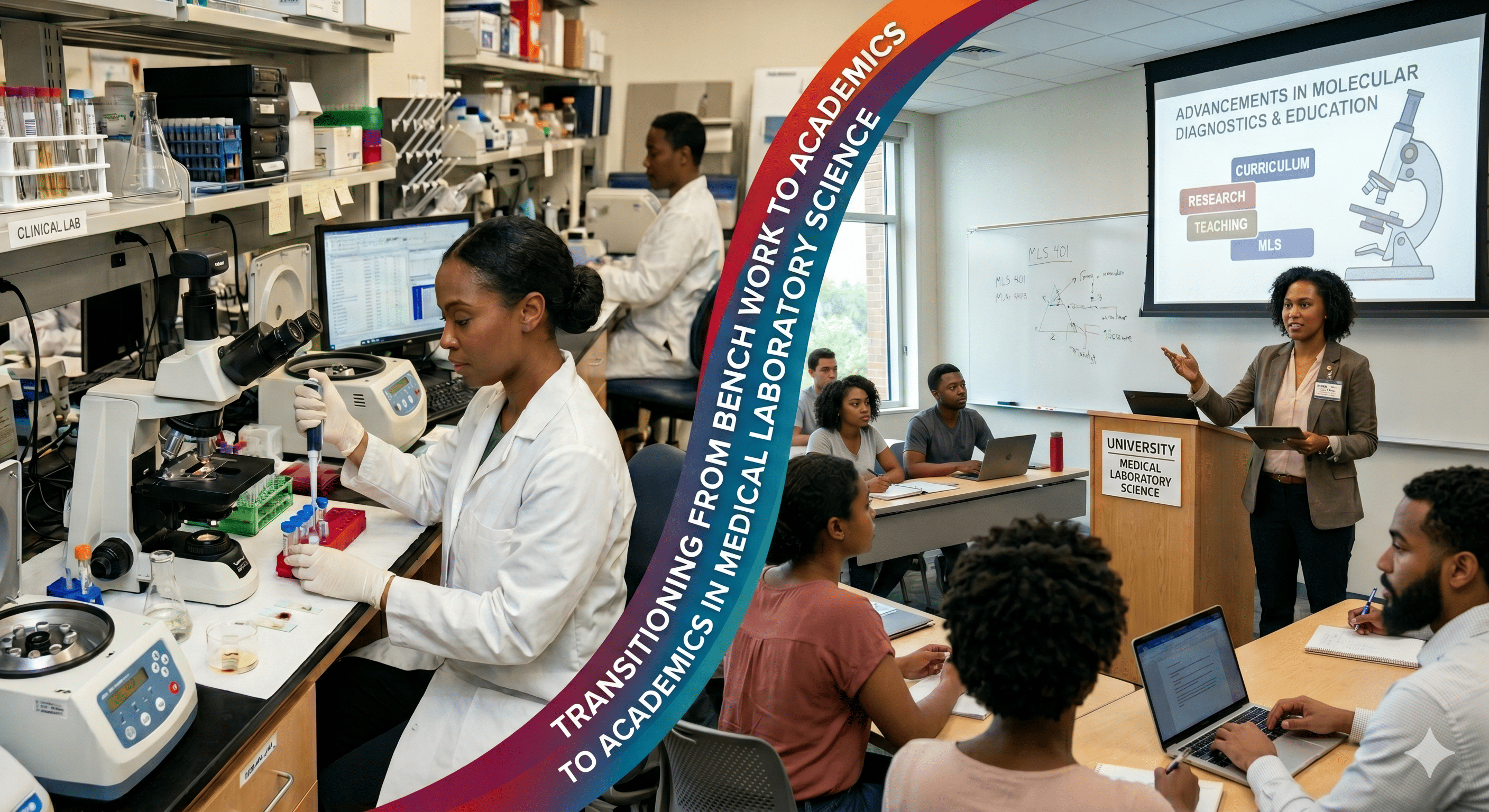
For years, my world was defined by the bench. But I felt a pull toward something different. I wanted to be more than a practitioner; I wanted to be a pioneer. I wanted to teach.
In Nigeria, being a Medical Laboratory Scientist gives you a unique "cheat code" in academia. While many graduates start as Graduate Assistants, our path is different. Thanks to the rigors of our five-year degree, the mandatory one-year internship, and the NYSC year, we step into the university system with a level of maturity that allows us to bypass the bottom rung.
I didn't start at the very base; I stepped in as an Assistant Lecturer (AL). It was a whirlwind of teaching 200-level students by day and conducting my own research by night.
But let’s be honest: the transition was a financial battlefield.
I remember the pressure of balancing my Master’s degree while lecturing. There were months where my salary felt like a drop in the ocean compared to the rising costs of tuition, research reagents, and the simple reality of transportation. I faced moments of deep uncertainty. I was "The Lecturer" in the classroom, but a struggling student the moment I stepped out of it.
The flexibility of academia is a gift, it allows you to breathe and grow, but the sacrifice is real. I had to learn that persistence isn't just about working hard; it’s about surviving the "broke" years to reach the "impact" years.
Moving from an Assistant Lecturer to a Senior Lecturer isn't just about time; it’s about contribution. Once I secured my Master’s, I moved to Lecturer II. From there, the path splits: you either climb through years of service or accelerate with a PhD, which acts as a golden ticket to Lecturer I and beyond.
To reach Senior Lecturer, the bench changes again. You aren't just running tests; you are publishing in reputable journals, mentoring the next generation, and proving that your research can change lives.
If you are looking to follow this path, transparency is key. In Nigerian universities, we follow the CONUASS (Consolidated University Academic Salary Structure). While these figures provide a baseline, remember that the hustle is the foundation, but the impact is the reward.
Estimated Academic Salary Scales (CONUASS) for MLS Professionals
• Assistant Lecturer: 170,000 to 270,000
• Lecturer II: 250,000 to 350,000
• Lecturer I: 320,000 to 420,000
• Senior Lecturer: 350,000 to 500,000
• Professor: 600,000 to 800,000
Disclaimer: Please note that these figures are estimated averages based on the CONUASS scale. Actual salaries are not fixed and vary significantly depending on the specific institution (Federal, State, or Private), location, and internal organizational policies.
Your BMLS degree is more than a license to work in a lab; it is a passport to the world of ideas. Whether you are at the bench today or standing before a chalkboard, know that the resilience you learned during those long lab hours is exactly what will make you a great professor.
I’ve shared my "bench-to-classroom" story now I want to hear yours. Are you sticking with the clinical life, have you ever felt the itch to switch to academia? or Is there something im missing or didnt mention in the post? Let’s talk in the comments!