

5min read • 6 months ago
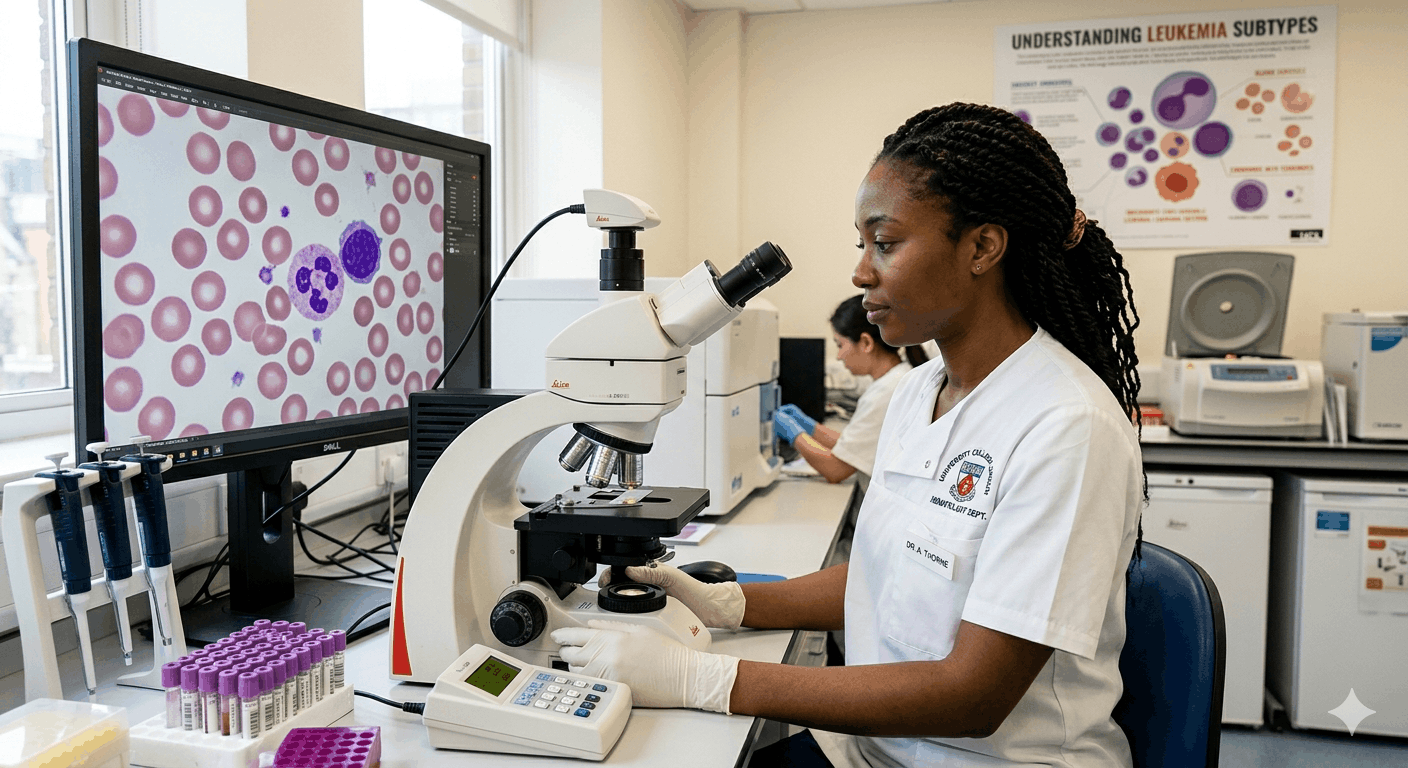
If the human body was a crime scene, the blood would be where it left fingerprints and haematology, the detective.
The word Haematology stems from Greek origins (“Haima” meaning “blood” and “logos” meaning "study of”). This term was coined in the 1810s, it literally means the study or doctrine of blood.
In Medical Laboratory Science, Haematology is the branch of medicine concerned with the study, diagnosis, treatment, and prevention of diseases related to blood, bone marrow, and the immune system.
Haematology is medicine’s first interrogation base. The blood hides many truths and the haematologist seeks to uncover them.
Haematology is the part of the laboratory that turns blood into evidence of infection, inflammation, anaemia, malignancy and bleeding disorders.
It is a multifaceted study involving both automated and manual techniques to analyze blood components in the laboratory.
In this unit, the most common specimen is Whole blood, usually collected into a purple-top anticoagulant (EDTA) bottle, because EDTA preserves blood cells for accurate analysis.
Depending on the investigation, other samples like citrated blood (blue-top) may be required for coagulation studies, and in special cases, bone marrow aspirates may be examined when the blood picture raises deeper suspicions.
The routine work of haematology revolves around tests that look simple on paper but are deeply life-informing in practice.
The Full Blood Count (FBC) is one of the most requested investigations in the hospital, providing a snapshot of red blood cells, white blood cells, platelets, and their indices.
Tests like Packed Cell Volume (PCV), Erythrocyte Sedimentation Rate (ESR), and Reticulocyte count help clinicians understand whether the body is losing blood, destroying blood, or failing to produce it.
When clotting becomes the concern, tests like Prothrombin Time (PT) and Activated Partial Thromboplastin Time (APTT) step in to assess the delicate balance between bleeding and clotting.
An entire ecosystem of equipment is employed in the haematology lab including the Haematology analyzer for automated cell counts, the Centrifuge for separating blood components, the Microscope for morphology, the Water bath for controlled reactions, Glass slides for blood film preparation and so much more.
In essence, Haematology is the diagnostic unit where blood acts as a living report card and scientists are trained to read every line.
A special part of Haematology will always be the Blood Film.
There is something humbling about it, something amazing about seeing truths as shapes, patterns and abnormality.
When it comes to the blood film, the microscope becomes less of an instrument and more of a witness, here’s why.
For instance, performing Full Blood Count rapidly with a Haematology analyzer will tell you that the Hemoglobin level is low, but the blood film will show you exactly why.
It shows you whether the red cells are small and pale hinting at Iron deficiency or if they are large hinting at Folate or Vitamin B12 deficiency. It shows you sickled cells twisted into painful crescents, target cells that seem like little bullseyes and rouleaux formations that seem like a stack of coins.
All quiet signs that represent something deeper going on in the body.
I must say perhaps the most unforgettable moment for many students like myself is seeing malaria parasites in a blood film for the first time. That significant moment when what sounded like a common fever becomes visible as living intruders, tiny ring forms sitting inside red blood cells, turning sickness into something you can literally point at and say: “There. That is the enemy”
This is what makes the blood film special, it doesn’t just support diagnosis, it brings you face-to-face with it.
Blood is not automatically safe because it is available. In Haematology, a careless moment can turn a life saving blood bag into a weapon.
When it comes to Blood Transfusion and Crossmatching, you’re dealing with compatibility, identity and trust.
Before blood is transfused, several checks must happen: ABO and Rhesus blood grouping, antibody screening, and the actual crossmatch test, where donor red cells are tested against the recipient’s serum to confirm that no dangerous reaction will occur. It sounds routine, but it is one of the most delicate processes in the laboratory, because the smallest oversight can trigger a transfusion reaction that spirals into haemolysis, shock, kidney failure, and death.
That is why Haematology is regarded as a deadly area where a single error can kill and where the urgency must not breed carelessness.
Behind every successful blood transfusion, there was a Haematologist who exhibited professionalism, accuracy and efficiency ensuring the patient is protected from blood that his/her body will treat like an enemy.
This goes to show how laboratory work is not behind the scenes, it is frontline medicine - controlled and life critical.
On a personal note, here are three things haematology has helped me discover about life.
Small things carry big meaning.
Do you know the size of a red blood cell? A single red blood cell is approximately one-tenth the width of a human hair, allowing roughly 10 red blood cells to line up across a single strand of hair.
Yet that tiny cell, that tiny detail can change everything.
A change in its count or paleness in appearance, things you would not notice on a surface level can be the difference between a mild condition and a life threatening diagnosis.
This unit teaches how things we overlook in life are sometimes the things that matters most.
Urgency should never breed carelessness.
In Haematology, the word urgent always flies around, samples come in as emergencies, results are required ASAP and lives are waiting for the verdict. In the midst of this, haematology harshly teaches that speed is never an excuse to be reckless because a careless step can cost a life.
Reminding us that even though pressure is real, your precision must always be stronger.
There is always communication, even in silence.
This might be my favorite lesson from Haematology. It shows how stories of infection, malignancy or even recovery can be told by patterns, counts, shapes and indices. All you need is the skill and patience to listen.
Beyind the lab, life works the same way: people may not always say what they feel but there will always be signs for those who pay attention.
In all, Haematology remains where blood becomes evidence, where microscopes reveal what symptoms cannot explain, and where precision is not just a professional requirement, but a moral responsibility.
I will end by saying as powerful as blood is, it is only one chapter of the body’s story. Sometimes, the real problem isn’t visible under the microscope, it’s dissolved in chemistry, hidden in enzymes, hormones, electrolytes, and metabolic whispers.
That’s exactly what we’ll be stepping into next.
Till then, stay curious.