

3min read • 6 months ago
AIM:
To educate on the step-by-step process of blood donation, breaking myths, and stating facts.
GIVEN:
Blood, blood donation, blood donor, patients, bleeding bay, blood bank
METHOD:
Expository
PRINCIPLE:
Like a vampire, your soul becomes hungry for blood; the only liquid gold that can save you as you fight for your place between the real world and the alien world. Both are calling you but you know the best of the two worlds, you are familiar with it, you have families there, you have friends, you have built a life, a name, perhaps a legacy but you hear the monitors beeping, your heart contracting like the pumping machine you told Shina to fix, you hear your sisters wailing, you feel trapped, you are talking but no one hears you. “Uhh-h-I-I- urmm stilll heeree, I am hanging by a thread, don’t give up on me”.
This has been and remains the reality of many people, both deceased and alive. Families and friends running helter-skelter, calling their friends and foes: Tom, Dick, and Harry to please donate for their mother, brother, uncle, or aunt who is on the brink of death and may meet their ancestors if they don’t get transfused. What is the big deal about this liquid? What is this liquid gold?
From infancy to adulthood, breath being the gift of life has been echoed in our ears through memory verses that we learnt by hook or crook. Every John winning Bible quizzes with Job 33:4 and every Aishat winning Quran competitions by reciting melodiously, verse 9 of As-sajda. But we know little to nothing about the gift that sustains life: blood!
This gift was first given by love, in 1818, by a husband who was bled to save his wife from dying from postpartum haemorrhage. Soon enough, this gift box traced its way to the motherland, Africa, in the 1920s, just before World War 2.
Blood. Just blood. A liquid usually discovered by accident by most children through gasps, fear, and curiosity after their first conscious fall that scraped their knees as toddlers. Our first eureka moment was explained to us by scientist mama or dada—“mamaa red wataa, my kneezz”. For many of us, that was our first introduction to life.
Blood is a body fluid that carries oxygen and nutrients to living cells, and it circulates within the body system. We are familiar with its color, red, and that gives us the idea that it is one fluid, like water. But blood is much more than a fluid; it is a tissue. If you remember your biology well, you will likely remember that a tissue is made up of cells that have the same function. The same thing goes for blood, it is made up of different cells and formed elements: the red blood cells (which give blood its red color), the white blood cells, platelets, and plasma, which is like a river these cells float in, to be transported around the body.
Your red blood cells are your forwards, steadily creating a heat map around your body system by carrying oxygen around your body to keep you breathing.
Your white blood cells, the Sergio Ramos of your system, defend your body from infections and preserve your immunity.
Your platelets help your blood clot after an injury has been sustained, as well as increase the healing time frame.
PROCEDURE:
Blood Donation? What's that?
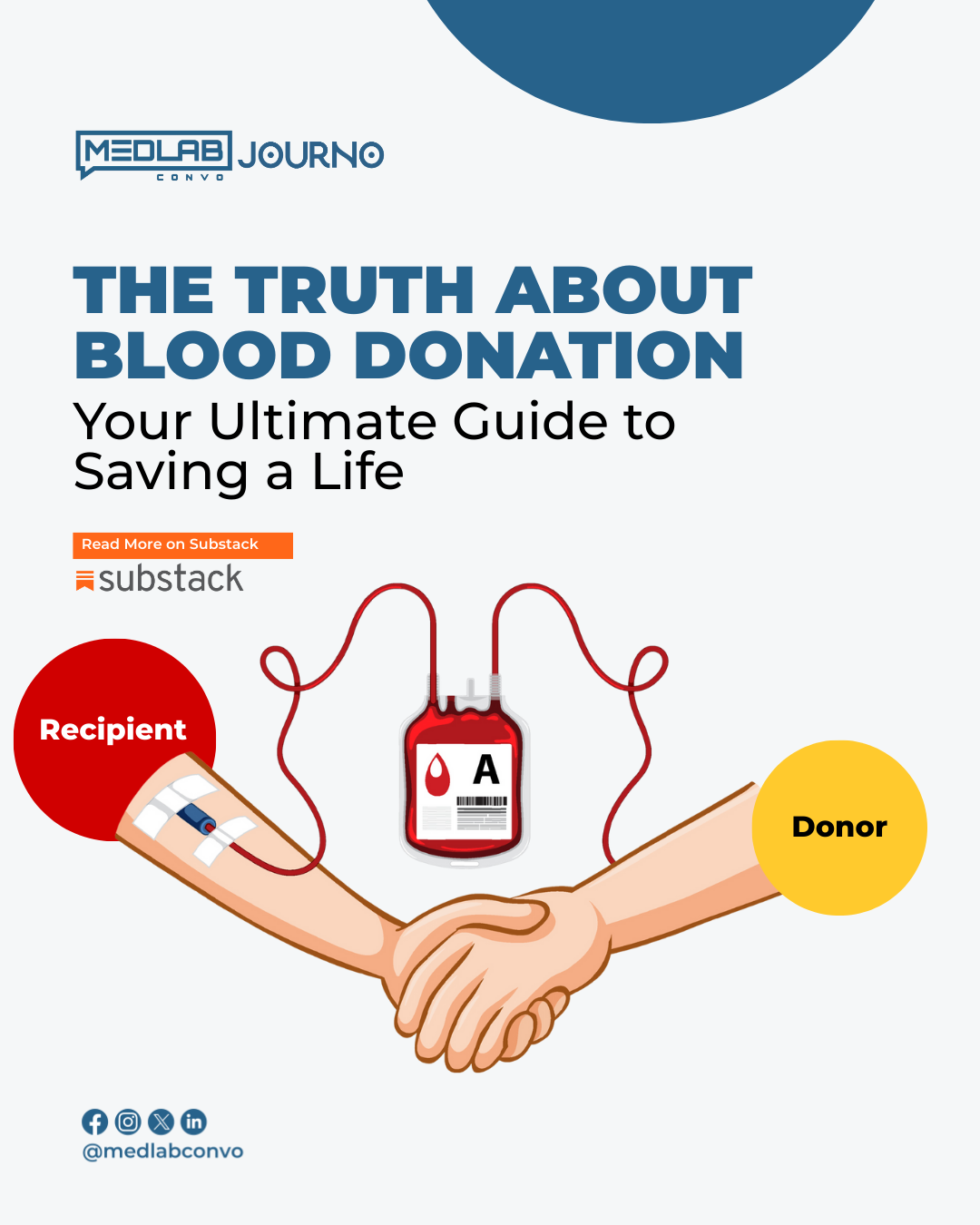
Blood donation is the process of drawing blood from a willing, screened, and physically fit person, with the aid of a sterile needle, into a blood bag.